Green Screen Studios: Everything You Need for Virtual Production
Quick answer: Green screen studios give filmmakers and creators a controlled space to shoot talent against a solid color background, which gets replaced in post-production with any digital environment. Getting the fundamentals right, proper lighting, the right distance from the screen, wardrobe planning, and a properly sized cyc wall, is what separates clean, professional keying from footage that looks obviously fake.
Virtual production has moved from a specialty technique to a standard tool for filmmakers, content creators, and brands who want flexibility without the cost of building physical sets. At the center of that flexibility sits the green screen studio, a simple concept that depends on getting several technical details right in order to actually work well on screen.
Understanding how green screen studios function, and what to look for in a facility, helps any production avoid the most common mistakes that show up in the final edit. Whether you are planning a commercial, a music video, or a full virtual set production, these fundamentals apply.
Key takeaways
- Green screen studios rely on even lighting and proper distance from the backdrop to create a clean key in post-production.
- A large cyc wall gives productions more room to move talent and avoid shadows falling on the background.
- Wardrobe and prop color choices directly affect how well the chroma key process works.
- Green screen footage is commonly combined with virtual sets or LED walls depending on the shot.
- Support areas like wardrobe rooms and makeup stations matter just as much as the stage itself for a smooth production day.
What a Green Screen Studio Actually Does
A green screen studio provides a solid, evenly colored backdrop, almost always a specific shade of green, that a video editor can digitally remove and replace with any background during post-production. This process, known as chroma keying, works because the green color is distinct enough from most skin tones and clothing that editing software can isolate and remove it cleanly.
The appeal for filmmakers and creators is flexibility. Rather than building a physical set or traveling to a location, talent can be filmed once against a green background and placed into virtually any environment afterward, from a newsroom to an outdoor location to a fully imagined digital world.
Why Green Instead of Blue
Green and blue are both common chroma key colors, but green is used more often in modern productions for a practical reason: digital camera sensors are generally more sensitive to green light, which produces a cleaner key with less visible noise around the edges of talent. Green also tends to conflict less with natural skin tones than blue, which matters for keeping edges clean around hair and skin.
Blue screens still show up in certain situations, particularly when talent is wearing green clothing or props that would otherwise be keyed out along with the background. Choosing the right screen color starts with reviewing wardrobe and props ahead of the shoot.
Lighting: The Most Important Fundamental
Even, consistent lighting across the entire green screen backdrop is the single most important factor in a clean key. Shadows, hot spots, or uneven color across the screen make it much harder for editing software to remove the background cleanly, which shows up as visible edges, color spill, or patchy sections in the final footage.
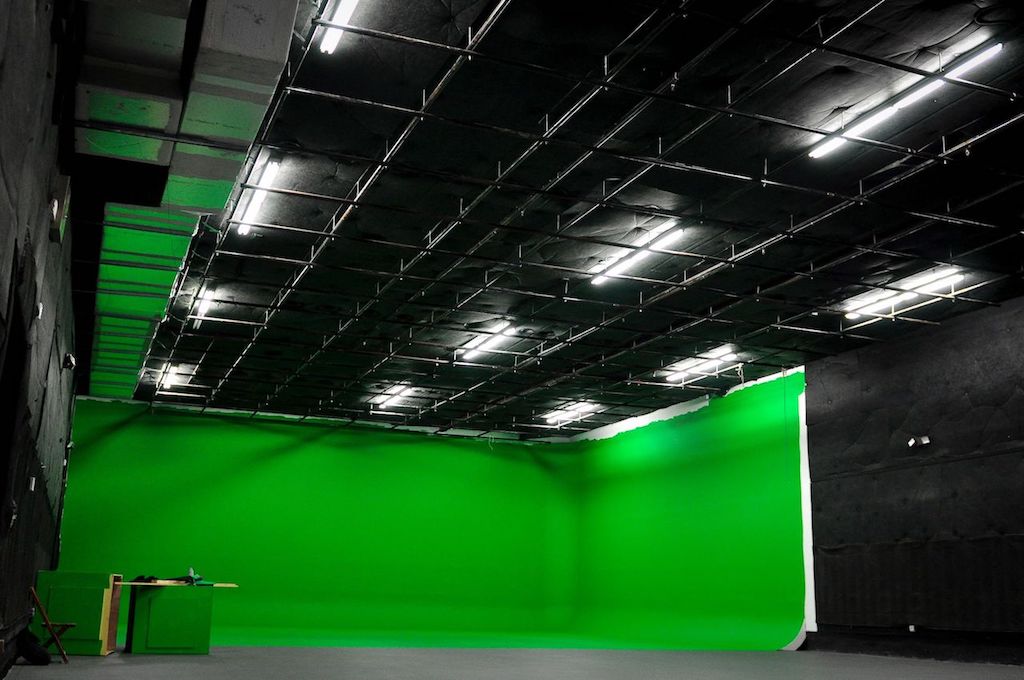
This is one of the reasons a properly built stage matters. A large, evenly lit cyc wall, paired with a lighting grid designed specifically for full-stage coverage, gives a production far more consistent results than a small green screen backdrop lit with a handful of standalone lights.
Distance and Space: Avoiding Spill and Shadows
Talent standing too close to a green screen risks two common problems: green light reflecting or “spilling” onto skin and clothing, and shadows falling directly on the backdrop. Both issues make the keying process harder and can leave a faint green tint or dark patch around the edges of talent in the final shot.
A large stage gives productions the room to position talent well away from the backdrop, which reduces spill and shadow problems significantly. This is where stage size becomes a genuine production consideration, not just a matter of convenience. A large four-corner cyc wall, paired with a properly sized soundstage, gives filmmakers more room to work with lighting, camera angles, and talent movement than a small or improvised green screen setup.
Wardrobe and Prop Planning
Chroma keying only works cleanly when talent and props avoid the exact color of the screen. Green clothing, green accessories, or reflective materials that pick up a green tint can all cause parts of the subject to disappear along with the background during the keying process.
Reviewing wardrobe and props before the shoot is a simple step that prevents a frustrating discovery in post-production. This is also where working with an experienced production team pays off, since staff familiar with the process can flag potential wardrobe issues before the camera ever rolls.
Green Screen vs. Virtual Sets and LED Walls
Green screen is often just the first half of the process. Once footage is shot against a green backdrop, it gets combined with a digital background during editing, commonly referred to as a virtual set. This is different from an LED wall setup, where the background is displayed live on a physical screen behind the talent during filming rather than added afterward in post-production.
| Approach | How It Works | Best For |
|---|---|---|
| Green screen + virtual set | Talent filmed against green backdrop, background added in editing | Studio-style shots, newsroom or presentation setups, budget-conscious productions |
| LED wall | Background displayed live on-screen during filming | Outdoor or action-heavy scenes, projects needing real-time visual reference for talent |
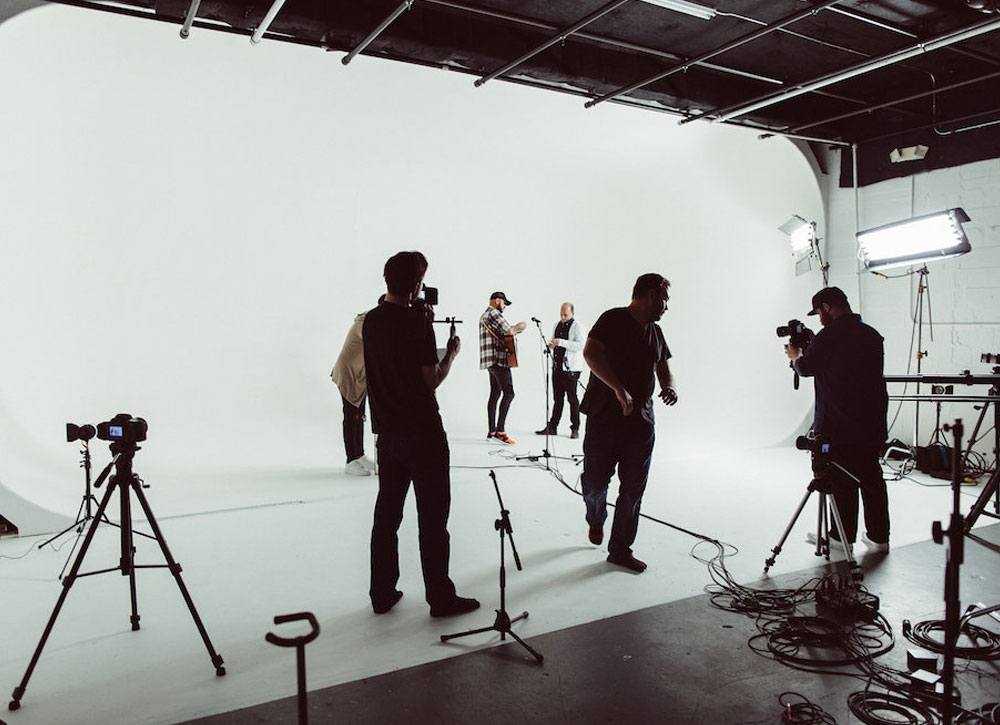
| Standard cyc wall | Seamless white or neutral backdrop without color keying | Product shots, interviews, or scenes not requiring background replacement |
Green screen combined with virtual sets tends to work best for setups where talent stays relatively stationary, such as a presenter behind a desk or podium. LED walls are often a better fit for scenes involving more movement or action, since the visible background gives talent a real reference point instead of an imagined one.
For a closer look at how digital backdrops are built and combined with green screen footage, our page on virtual sets walks through the process from filming through final edit.
Support Areas That Keep a Green Screen Production Running Smoothly
A green screen stage rarely operates in isolation. Wardrobe rooms, makeup stations, and dressing areas all play a direct role in getting talent camera-ready without wasting production time. Having these spaces close to the stage itself, rather than scattered across a facility, keeps a shoot day moving efficiently.
At M3 Studios, the green screen stage is supported by newly remodeled production areas that include dressing rooms, central wardrobe, hair and makeup rooms, and a green room, all located to support a full shoot day without unnecessary downtime between setups.
Planning Equipment and Crew for a Green Screen Shoot
Camera, lighting, and audio equipment all need to work together with the green screen setup to produce a clean final result. Productions that plan their equipment and crew needs ahead of time, rather than figuring it out on shoot day, tend to move through setups faster and avoid costly delays.
Many facilities, including green screen studios that do not stock every piece of gear in-house, work directly with local equipment vendors and crew personnel to help productions source exactly what a shoot requires, from cameras and lighting kits to a full crew for a larger production.
Final Thoughts on Green Screen Fundamentals
Green screen studios give filmmakers and creators the flexibility to place talent in virtually any environment without the cost of building a physical set. Getting the fundamentals right, even lighting, adequate distance from the backdrop, careful wardrobe planning, and the right combination of green screen, virtual sets, or LED walls, is what determines whether the final footage looks seamless or obviously composited.
Ready to plan your next green screen production? Get in touch with the M3 Studios team to talk through your project and find the right stage setup for your shoot.
Frequently Asked Questions
1. Why do most green screen studios use green instead of another color?
Green is used most often because camera sensors are more sensitive to it, producing a cleaner key with fewer visible edge artifacts, and it conflicts less with typical skin tones than other colors like blue.
2. What causes a green screen shot to look fake?
Uneven lighting, shadows on the backdrop, green spill onto talent, and green-colored wardrobe or props are the most common causes of a poor-quality key.
3. Is a bigger green screen stage always better?
A larger stage gives productions more room to position talent away from the backdrop, reducing spill and shadow issues, which generally leads to a cleaner final result, especially for productions involving movement.
4. What is the difference between a green screen and an LED wall?
A green screen backdrop gets replaced with a digital background during editing, while an LED wall displays the background live on screen during filming, giving talent a real-time visual reference.
5. Do green screen studios provide filming equipment?
This varies by facility. Some studios do not stock equipment in-house but work with local vendors and crew to help productions source cameras, lighting, and audio gear for the shoot.